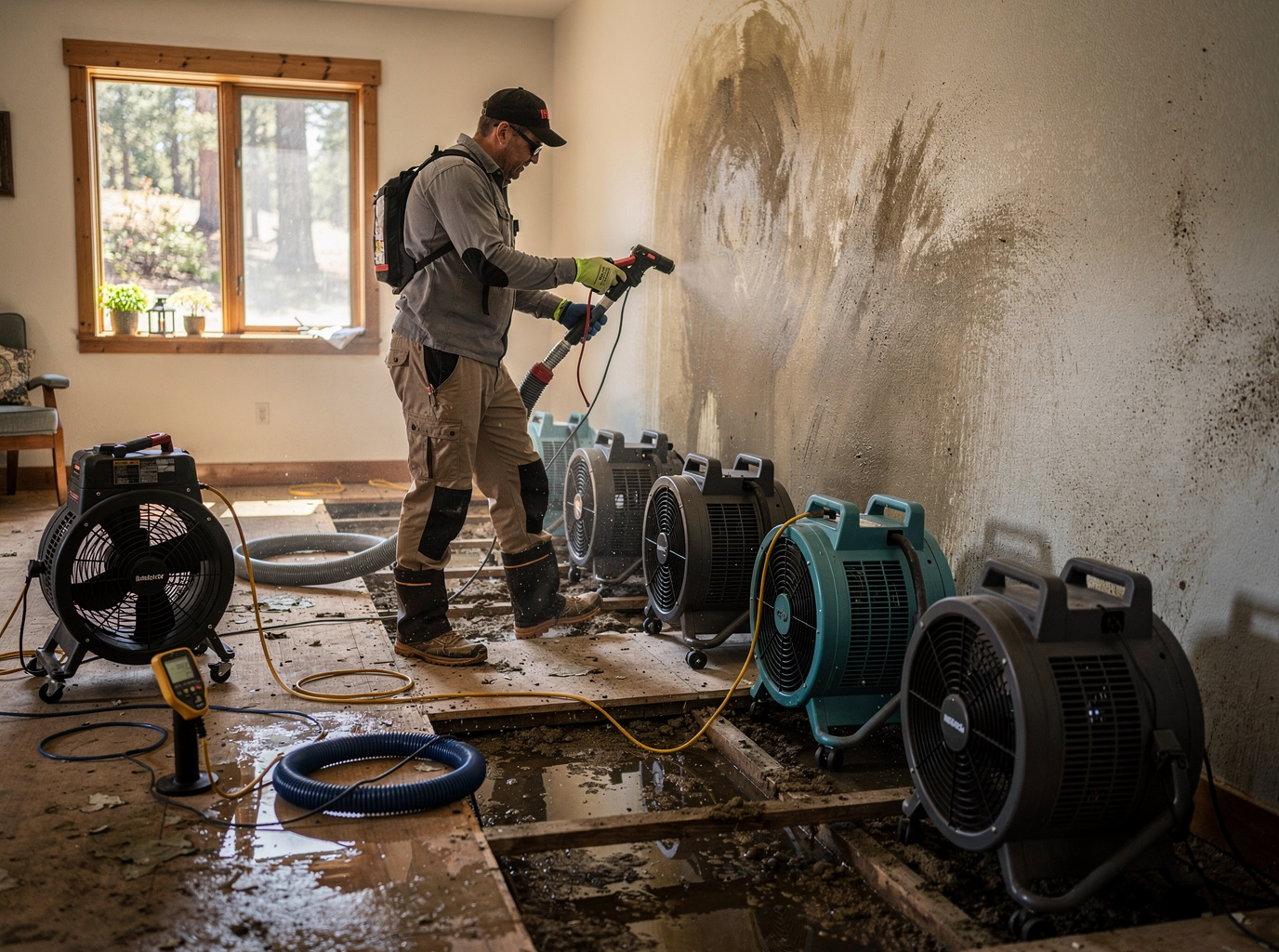
Rimforest sits at elevation in San Bernardino County where heavy winter snowfall melts and seeps into crawl spaces and older wood-frame cabins. These homes often have limited ventilation and tight crawl spaces that trap moisture against joists and subfloors. Structural drying here requires tracking temperature swings between day and night that slow evaporation and push water deeper into framing. Technicians map moisture with meters before placing air movers and dehumidifiers sized for the small, compartmentalized layouts common along Pine Avenue and surrounding streets.
Edge cases include saturated insulation behind knotty-pine walls and hidden rot in floor systems near Lake Arrowhead properties that share similar building stock. Drying must continue until readings drop below 12 percent on multiple surfaces to avoid mold growth during the next freeze cycle. Over-drying can crack older plaster and paneling, so crews monitor daily and adjust equipment rather than running fixed schedules. County health guidelines on post-flood remediation apply when water originates from outside sources.
Portable refrigerant dehumidifiers paired with low-grain desiccant units handle the high relative humidity that lingers after snow events. Technicians seal off rooms to create negative pressure and prevent moisture migration into living areas. Final verification includes thermal imaging to confirm no pockets remain in rim joists or under stairwells before equipment removal.
Technician insight
In Rimforest, the thing that catches most people out with Structural Drying is how repeated freeze-thaw cycles from winter snowfall drive moisture deep into older wood joists and rim boards before anyone notices.
Snow Melt in Pine Avenue Cabin
A Rimforest cabin near 26491 Pine Ave experienced repeated water intrusion after heavy snowfall. We found saturated subfloor joists and insulation hidden behind baseboards. Directed drying with containment and daily monitoring brought moisture levels down safely without damaging the older paneling.
Structural Drying Services We Offer
✓Crawl Space Drying
Removes standing water and pulls moisture from soil and joists in Rimforest crawl spaces where snow melt collects.
✓Attic Moisture Extraction
Dries insulation and rafters after roof leaks or ice dam failures common during heavy San Bernardino County winters.
✓Floor Joist Drying
Targets hidden saturation in subfloor framing to prevent warping in older mountain cabins near Lake Arrowhead.
✓Wall Cavity Drying
Uses directed airflow to dry behind paneling and plaster without full demolition in Rimforest homes.
✓Post-Snow Melt Structural Drying
Addresses repeated freeze-thaw moisture cycles that affect foundations and lower levels along Pine Avenue.
Structural Drying Cost in RIMFOREST, CA
| Service | Typical Range | What Affects It |
|---|---|---|
| Initial Moisture Assessment | Free | Includes meter readings and written scope |
| Crawl Space Drying Setup | $450–$950 | Depends on access and square footage |
| Daily Equipment Rental | $250–$600 | Varies with number of units and duration |
| Full Structural Drying Package | $1,200–$3,500 | Typical for single-room to whole-home jobs after snow melt |
Ranges are typical for RIMFOREST, CA and confirmed with an exact written quote before any work starts.
How it works
- 1
Moisture Assessment
Technicians inspect all affected materials with meters and thermal imaging to locate hidden water in Rimforest structures.
- 2
Water Extraction
Standing water is removed first using pumps and wands before drying equipment is placed.
- 3
Equipment Setup
Air movers, dehumidifiers, and containment barriers are positioned based on home layout and current humidity.
- 4
Daily Monitoring
Readings are checked and equipment adjusted until moisture levels stabilize below target thresholds.
- 5
Final Verification
Thermal scans and meter checks confirm the structure is dry before equipment is removed.
Pricing
Upfront quotes after on-site inspection; ranges reflect typical Rimforest jobs.