2026-10-12 ·
What Influences Water Damage Restoration Pricing Around Lake Arrowhead
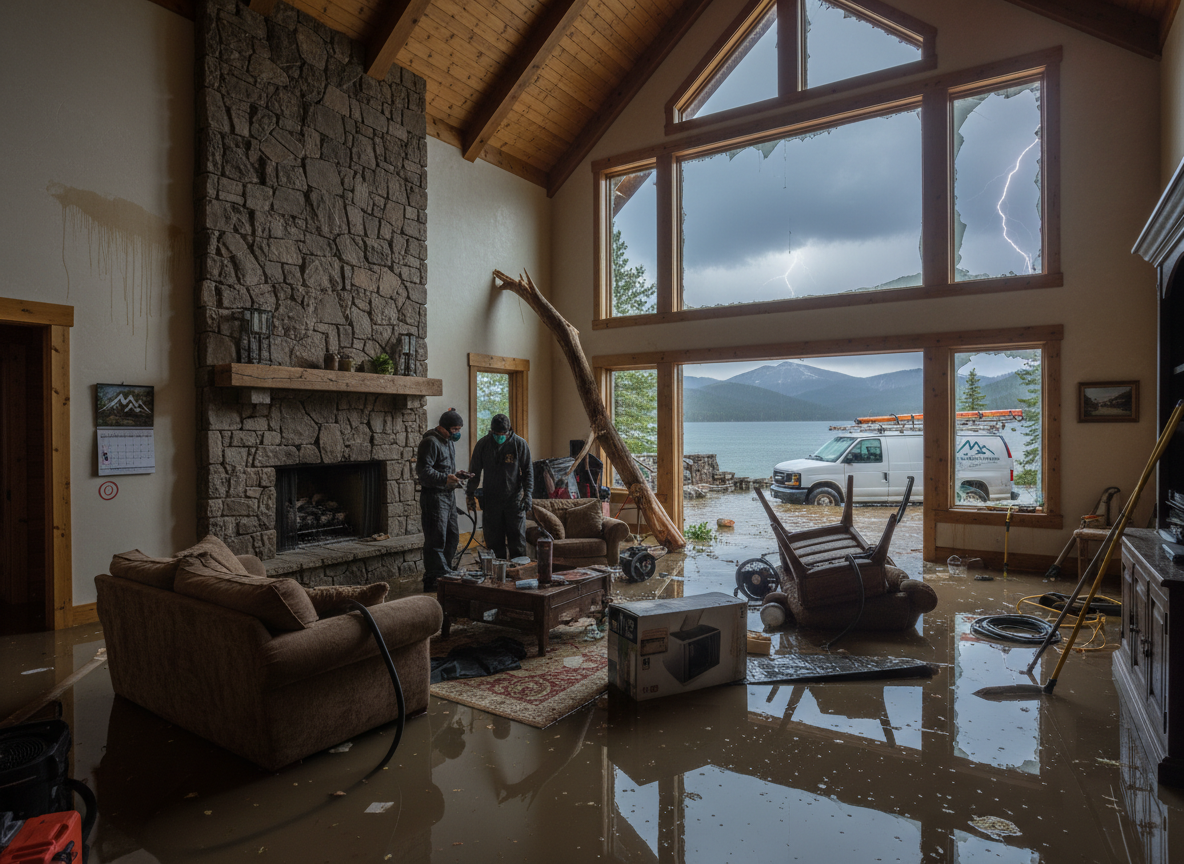
Several measurable factors determine water damage restoration pricing around Lake Arrowhead, starting with the volume of water involved, the category of contamination, and the time required for extraction and drying in mountain terrain. In Rimforest homes, older cabin construction with tight crawl spaces and wood framing often extends labor hours compared to newer builds, while winter snowfall adds seasonal spikes in calls after melt events. These elements combine to set ranges that reflect actual job complexity rather than flat rates.
Extent of Damage and Affected Materials
The square footage impacted and the types of materials saturated drive the largest share of restoration costs in San Bernardino County mountain communities. Water that reaches subfloors, insulation, or structural beams in Rimforest cabins requires more demolition and replacement than surface-level issues on tile or concrete. Crews must account for the age of many local homes, where layered additions create hidden pockets that slow assessment and increase equipment runtime. Water extraction followed by targeted drying prevents secondary issues, yet the labor scales directly with how far moisture has traveled through walls and ceilings typical of Lake Arrowhead area properties.
Local Climate and Seasonal Patterns
Rimforest and surrounding Lake Arrowhead neighborhoods experience heavy winter snowfall that leads to repeated freeze-thaw cycles and roof leaks or foundation seepage once temperatures rise. These patterns mean restoration teams often work in colder conditions that slow drying times and require additional dehumidification capacity. Properties at higher elevations face more frequent snowmelt intrusion through older chimneys and window seals, extending project timelines. Readers can learn more about these recurring issues in winter rain and snowmelt water issues in Rimforest homes. The mountain climate therefore adds both equipment and scheduling premiums not seen in lower-elevation parts of the county.
Water Category and Contamination Risks
Clean water from supply lines costs less to handle than gray or black water that enters through storm runoff or sewage backups common after heavy mountain rains. In Rimforest, older septic systems and steep terrain increase the chance of contaminated water reaching living spaces, requiring full containment and specialized disposal. Structural drying protocols must then include antimicrobial steps that add time and materials. Accurate category assessment early prevents underbidding and ensures crews arrive with the right PPE and equipment for the specific job conditions found around Lake Arrowhead.
Property Access and Construction Details
Narrow driveways, steep lots, and multi-level cabin layouts common in Rimforest and nearby Twin Peaks slow equipment transport and extend setup times. Many homes built decades ago feature balloon framing and limited access points that complicate moisture mapping with infrared tools. Restoration pricing reflects these realities through additional crew members and smaller, more maneuverable drying units suited to tight mountain spaces. Detecting hidden water damage in Rimforest cabins after storms outlines inspection steps that help homeowners understand why access challenges raise overall project costs.
Equipment Runtime and Follow-Up Monitoring
Drying times in the local climate often run longer due to high humidity after snowmelt, requiring 48- to 72-hour equipment cycles before moisture readings drop to safe levels. Technicians return for daily checks using meters on wood framing and drywall in San Bernardino County homes, adding to the total. Homes near Lake Arrowhead with finished basements need extra air movers placed in confined areas. These operational details, combined with the need for content handling in smaller living spaces, produce pricing that accounts for both initial response and the full drying verification process.