
2026-10-12 ·
Winter Rain and Snowmelt Water Issues in Rimforest Homes
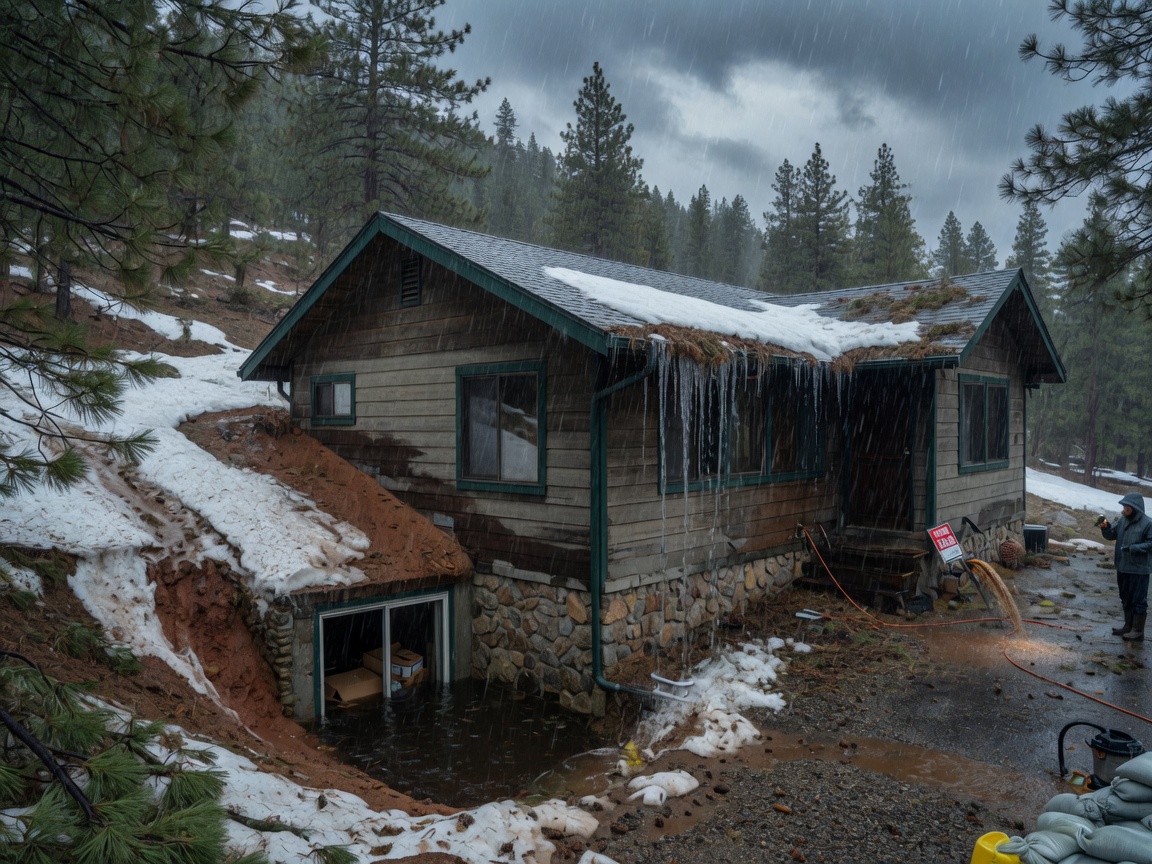
Winter rain combined with snowmelt in Rimforest often leads to water intrusion through foundations, crawl spaces, and roof valleys within 48 hours of a thaw following heavy snowfall. The mountain climate in San Bernardino County brings repeated freeze-thaw cycles that expand and contract soil around older cabin foundations, creating pathways for water to enter basements and lower levels. Homes near Lake Arrowhead experience similar patterns because shared elevation and drainage conditions allow runoff to pool against structures built on slopes.
How Snowmelt Interacts with Local Terrain
Rimforest sits at an elevation where winter snowfall commonly exceeds several feet, and spring melt produces steady runoff that follows natural drainage paths down hillsides. This water moves quickly across compacted soil and can overwhelm gutters or French drains installed decades ago on typical cabin lots. Steep driveways and retaining walls common in the area direct flow toward foundation walls rather than away from them. When rain falls on top of existing snowpack, the combined volume saturates ground that remains frozen at deeper levels, forcing moisture laterally into crawl spaces. Cabins built before modern grading standards often lack proper slope away from the structure, allowing meltwater to sit against siding for days. These conditions differ from flatland properties because the constant movement of water through rocky soil carries fine sediment that can clog perimeter drains over successive seasons.
Typical Entry Points in Rimforest Cabins
Roof valleys and chimney flashings on older Rimforest homes collect ice dams during prolonged cold snaps, then release water under shingles once temperatures rise above freezing. Attic insulation absorbs this moisture and transfers it to ceiling joists, creating hidden saturation that appears weeks later as ceiling stains. Window wells and basement egress points on downhill sides of lots fill with slush and overflow when melt rates exceed the capacity of small drains. Wood siding on cabins expands and contracts with repeated wetting, opening gaps around door thresholds that allow water to wick inward. Plumbing vents and skylight curbs also become vulnerable when snow piles against them and melts slowly over several days. Each of these points requires inspection focused on the specific sequence of freeze followed by rain rather than isolated storm events.
Assessing Damage After Thaw Periods
Homeowners should begin checks once daytime temperatures stay above 40 degrees for 48 hours, allowing visible meltwater to recede enough for safe access. Start at the lowest points of the property and trace water stains upward, noting any soft spots in subfloors or baseboards that indicate prolonged contact. Water extraction becomes necessary when standing water remains in crawl spaces after surface snow has cleared. Checking attics for damp insulation and compressed batts reveals whether roof melt has penetrated sheathing. Documenting the extent of saturation with photos taken from multiple angles helps track whether moisture is spreading or drying naturally. Properties in nearby Lake Arrowhead follow the same sequence because elevation-driven weather patterns align closely with Rimforest conditions.
Long-Term Effects on Structural Materials
Repeated winter cycles shorten the lifespan of untreated wood framing and particleboard subfloors by several years when moisture levels stay elevated for more than a week. Drywall in lower levels absorbs salts from soil water, leading to recurring efflorescence even after surface drying appears complete. Structural drying equipment must account for the slower evaporation rates that occur when outdoor humidity remains high during spring storms. Insulation that has been wetted loses R-value permanently and can compress against pipes, increasing the chance of future freezing. Over multiple seasons, these effects compound in cabins where original materials predate current moisture-management standards common in San Bernardino County construction.
When to Investigate Further
If ceiling discoloration appears more than two weeks after the last measurable snow, hidden saturation likely exists behind finishes and warrants closer examination. Persistent musty odors in closets or under stairs during spring point to moisture trapped in wall cavities that standard ventilation cannot reach. Detecting hidden water damage in Rimforest cabins after storms outlines specific tools and inspection sequences that match local building styles. Homes located on shared drainage paths with neighboring properties in Skyforest or Running Springs often experience cross-lot flow that standard perimeter grading does not address. Early verification prevents mold colonies from establishing in materials that remain damp through the wettest months of the year.